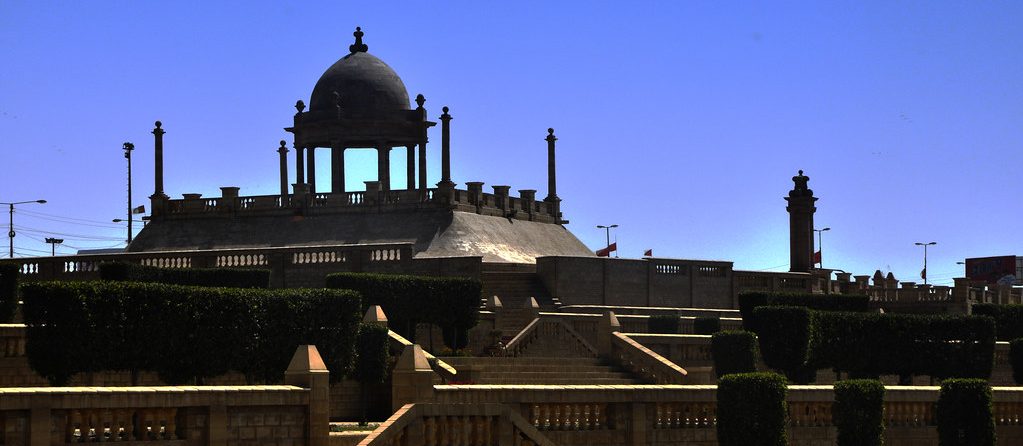
We are all aware of the horrors that the devil, also known as capitalism, brings with itself. Not surprisingly, we often associate capitalism with huge firms, market places, businesses, etc. Basically, anywhere with rigorous economic activity. However, we hardly ever observe how the impact of capitalism on the road defines what place individuals hold in society as per their income. Simply put, there is an obvious economic inequality on the road, which the consumers are fully aware of, but instead of fighting the system, they have accepted their place silently. To comprehend this economic disparity closely, I set forth to M.A Jinnah road on a Saturday morning with a notebook and a camera.
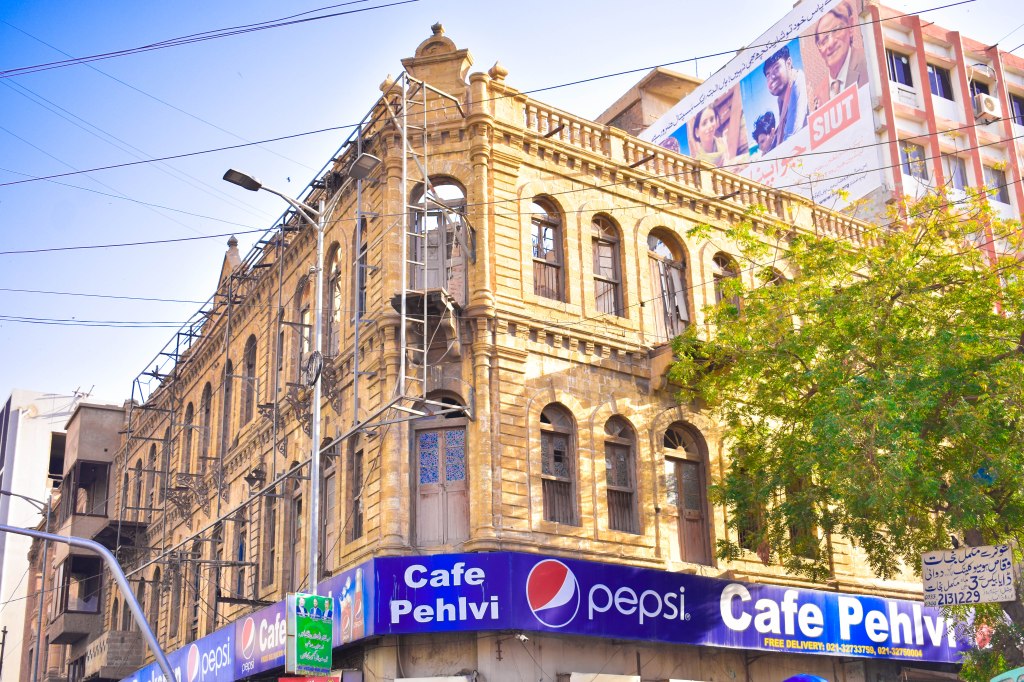
Guarded by the old relics and ancient history of the city, M.A Jinnah road remains, to this day, one of the oldest and most engaging route of Karachi, providing a link to hospitals, housing, worship places, market, etc. Indeed, the road is so diverse in nature that vehicles range from cycles and donkey carts to local buses, Airlift, Swvl, the new models of Toyota Corolla (other expensive cars), motorcycles, and rickshaws. Interestingly so, the treatment of each vehicle, and especially its users, differs greatly from the other. As a result, “how one is treated depends a great deal on one’s economic resources” (Weisskopf, 2013, p.44)
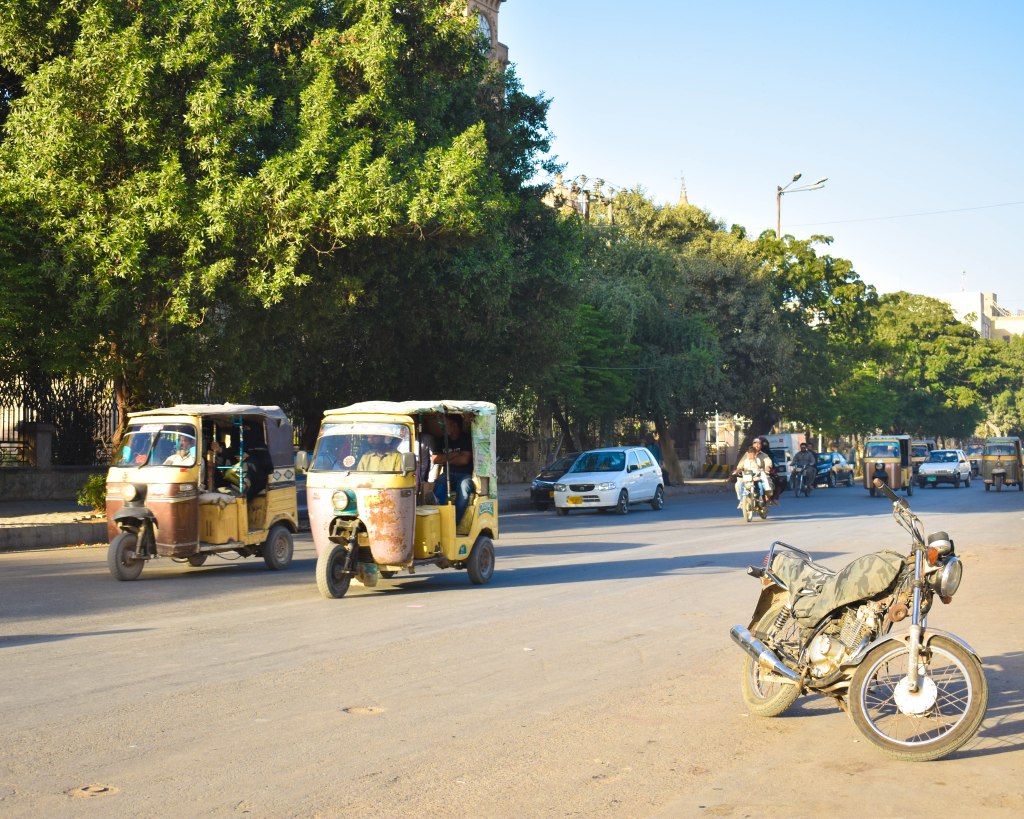
Since I was traveling in an air conditioned car with a green government number plate, I was received with “undue deference” and “granted undue favors” (Weisskopf, 2013, p.44). Suddenly, I noticed that while M.A Jinnah road was home to the residents living on either side, it was business for beggars and traffic police. Young children of 6-12 walked unsupervised with a spray bottle full of water in one hand and an overly used rag in the other, cleaning windshield mirrors of various cars. So mindful were they of their target customers that they never bothered cleaning rickshaw mirrors because they know they would not receive a significant amount of money compared to that being handed by the owner of a Honda City. Beggars, too, aimed at asking money from owners of luxurious cars. And so, I gathered that even beggars and street children actively participate in highlighting the economic inequality on road and contribute towards it. Weisskopf (2013) mentions how treatment differs towards individuals with possession of resources that are considered above average in society (p.44). Similarly, traffic policemen ignored well-maintained and expensive cars while stopping bikers for an unreasonable fine.
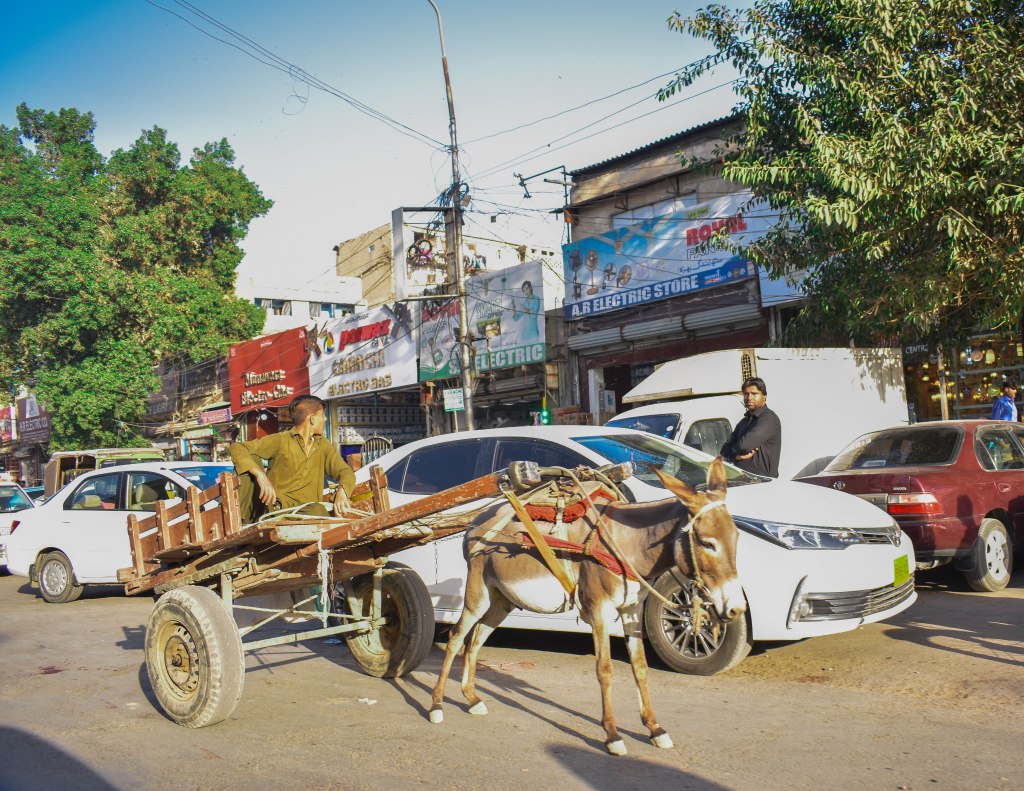
When I crossed Dil Pasand Bakery, a donkey cart parked beside an updated model of Toyota Corolla caught my attention. I was particularly intrigued by the expression of the man on the donkey cart, who was admiring the new model and I realized that the capitalistic order has not only forced us to silently accept our place in the economic system as per our income but it has also enabled us to understand that we cannot go beyond the assigned place. The man sitting on the donkey cart knows that he would never be able to buy such an asset because he is aware that “family wealth” (Weisskopf, 2013, p.49) plays a critical role in the advancement of an individual on the socio-economic ladder. Weisskopf (2013) also states that the barriers poor people face demotivate them to work hard and “apply their skills” effectively (p.48). Thus, individuals accept their pre-assigned roles.
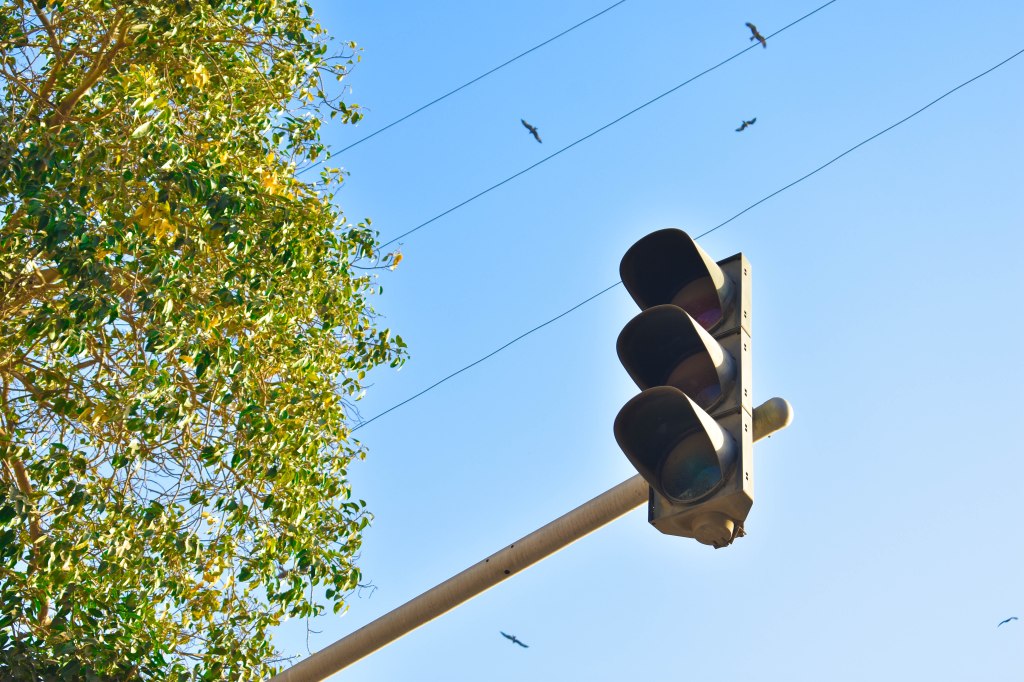
When waiting at a signal, I gathered that the relationship among individuals on the road was also based on their economic status and this further aggravated economic disparity. Marx reveals that “in the relationship of estranged labor, each man therefore regards the other in accordance with the standard and the situation in which he as a worker finds himself” (Marx, 2002, p.153). Hence, it is fit to say that individuals no longer view each other as humans but by the position they hold in the economic order. Due to this, we form a vertical relationship based on economic inequality that is hierarchical and uneven in nature rather than horizontal, which is balanced. Sadly, we have even begun to see humans as capital.
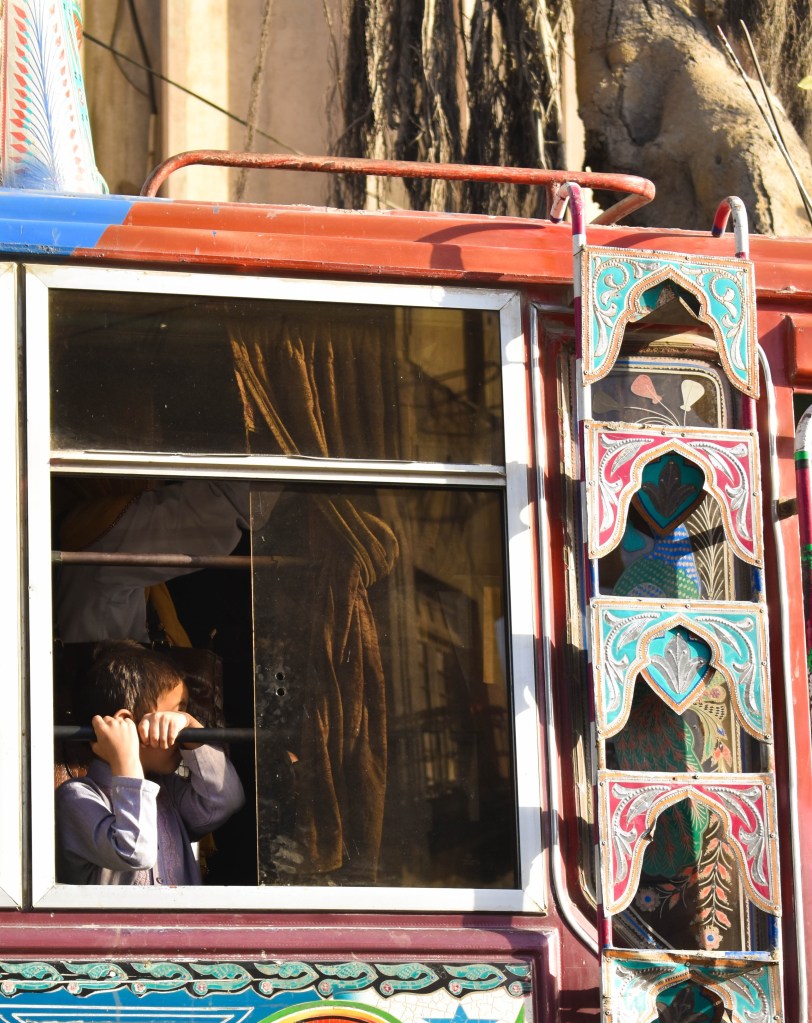
The economic gap has been so greatly heightened that the divide between the rich and the poor on the road is no longer financial, it is also spatial. Unfortunately, the rich and poor of the city lead two different lives in two different worlds while living in the same city and sharing the same road. While I sat in my air-conditioned car with plenty of leg space and three vacant passenger seats, I observed the bus right beside – inside, a young boy held the bar of the window tightly as more and more people filled in and there was hardly any space for him to stand.
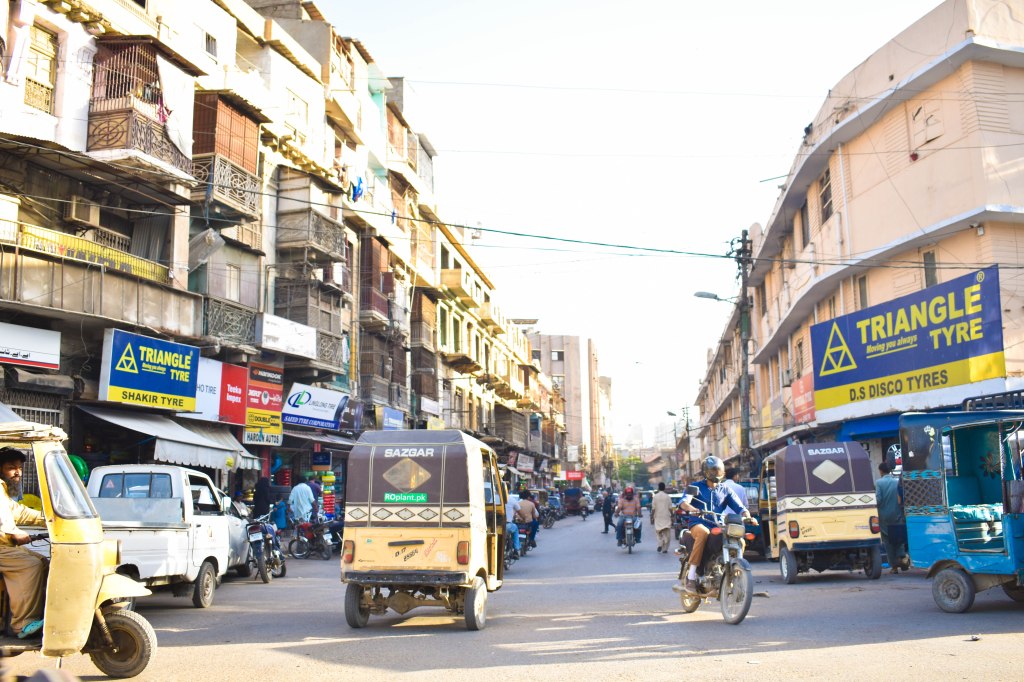
Additionally, we may also question whether infrastructure proves beneficial to citizens or does it accelerate economic inequality, especially on the road. It is true that “even though the association between infrastructure and growth has been well established with the general agreement being that these two are positively related, it is wrong to assume that economic growth attributable to infrastructure development will consequently lead to a reduction in inequality” (Bajar, p. 1). The road leads to markets where the potential labor force has already reached its peak, hence, more people pouring in the market not only create a competition for the already existing labor force, they also worsen the economic inequality (Bajar, p. 2)
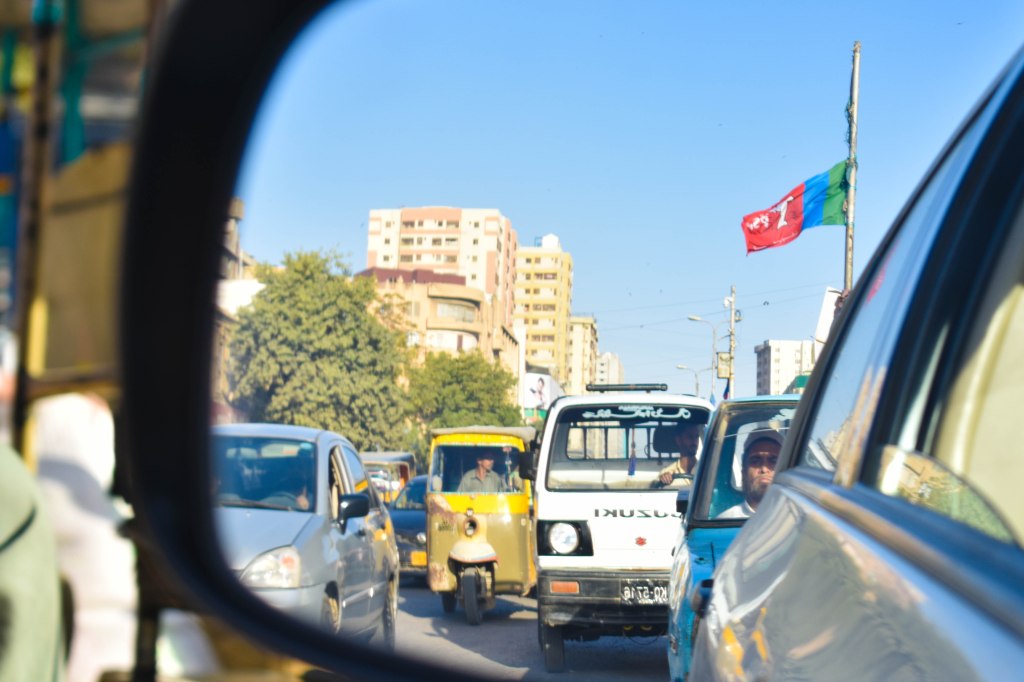
As astonishing as it may appear, while capitalism has given birth to economic inequality on the road, “political parties, which should play an aggregating role, instead intensify unequal patterns of participation” (Weir, 2004, p. 677). This is essential to the understanding of economic inequality at large because such political parties intentionally desire poverty to exist so that they can promise the poor a better lifestyle and economic opportunities, hence, increasing their chances of being re-elected. The government also largely favors the elite and is aware that “disrupting this cycle of mutual benefit is not simple, since it threatens the lifeblood of the current system” (Weir, 2004, p. 678). According to them, logically, a city can thrive in the presence of poverty but it cannot thrive without its businessmen. As a result, even “policies crafted to address the problems of low-income minorities either exacerbated inequality or were ineffective” (Weir, 2004, p.679) such as the encroachment drives.
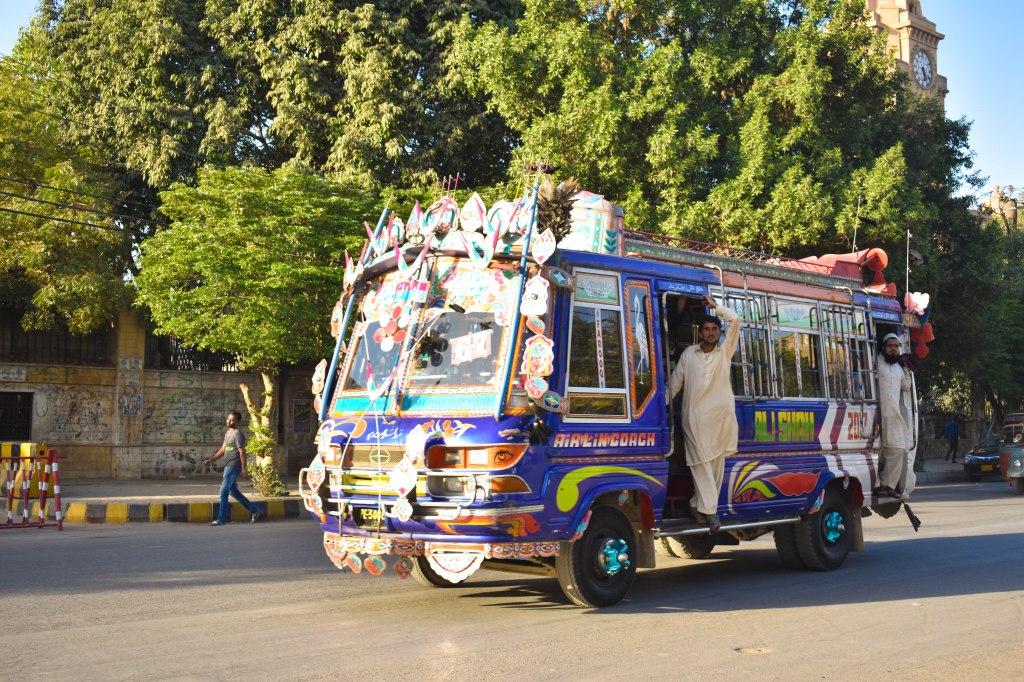
M.A Jinnah is just one example of the many roads in Karachi where economic disparity not only prevails but is also unconsciously and consciously practiced actively. “By definition, infrastructure is a public good but its access” and utilization “is not uniform” (Bajar, p. 9). The citizen using a motorcycle is not on the same economic level as the one driving a new Honda Civic. In fact, they are even exposed to different conditions on the same road based on their income – one sitting in an air-conditioned car and the other facing extreme heat, smoke, noise, etc. The situation is even worse for those using public transport.
References
- Marx, K. (2002). Other writings by Marx and Engels, In P. Gasper (Ed.), The communist manifesto: a road map to history’s most important political document (p.153). Penguin Publishing
- Bajar, S. (n.d.). The Impact of Infrastructure Provisioning on Inequality, (pp. 1-9). Retrieved from https://www.un.org/development/desa/dspd/wp-content/uploads/sites/22/2018/07/1-2.pdf
- Weir, M. (2004). Challenging Inequality. Perspectives on Politics, 2, 677–681. Retrieved from https://www.jstor.org/stable/3688536
- Weisskopf, T. E. (2013). What Kinds of Economic Inequality Really Matter? Indian Economic Review, 48, 39–58. Retrieved from https://www.jstor.org/stable/24583395
- All photographs are clicked by the author of this article
.
 From City to City